
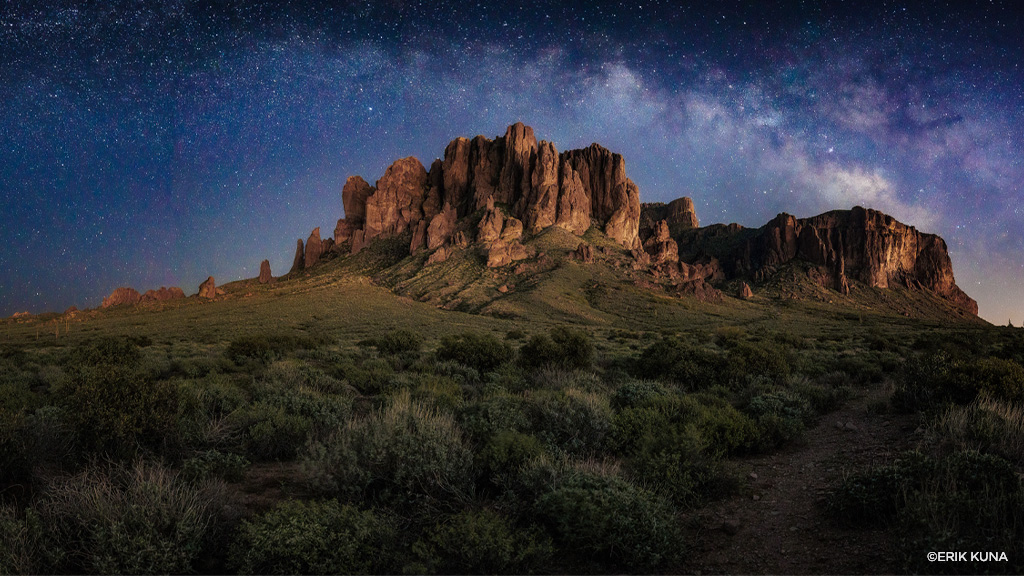
Think light pollution ruins night photography? That doesn’t have to be the case. In this clip from his conference session Nightscapes: The Dark Side of Landscapes, Erik Kuna shows how he used the glow of Phoenix to light up Arizona’s Superstition Mountains—while still capturing the Milky Way above.
You’ll see how direction, timing, and smart planning can turn city glow into a powerful tool for your nightscapes. Instead of fighting light pollution, Erik uses it to create dramatic, portfolio-worthy shots. Keep reading or watch the video below.
Letting the City Light Your Scene
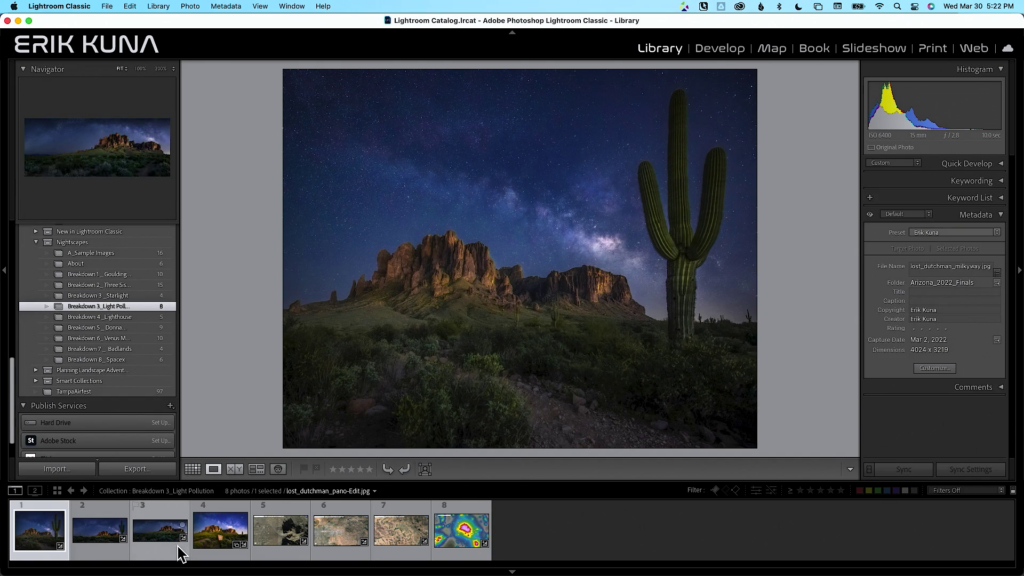
Instead of using starlight or bringing your own light, sometimes you can actually use city light pollution to illuminate your foreground. That’s exactly what I did here—this entire scene, from the cacti to the mountains, is lit by the Phoenix metro area.

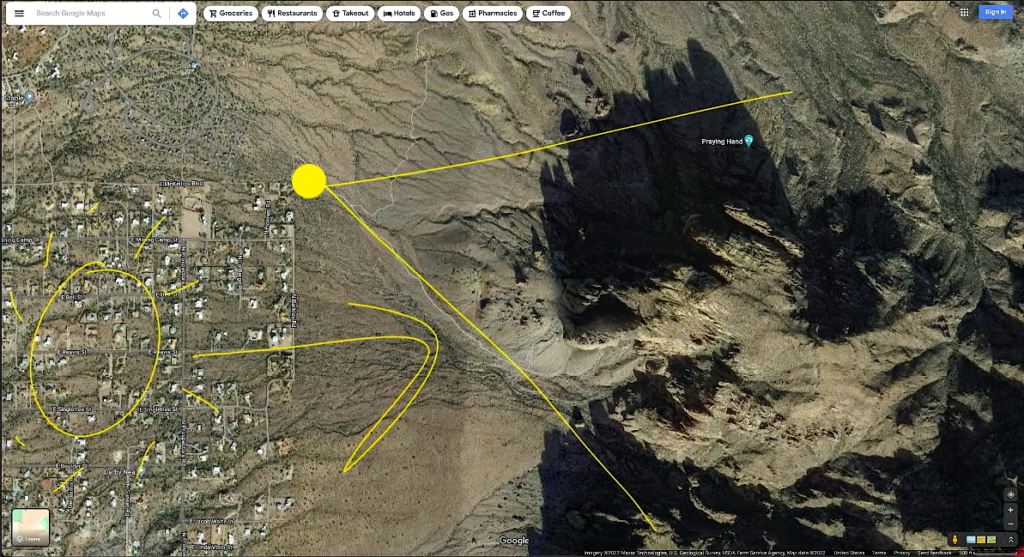
Because I framed my shot in a certain direction, I was able to balance that glow on the foreground with the Milky Way rising behind it. Light pollution becomes my light source.
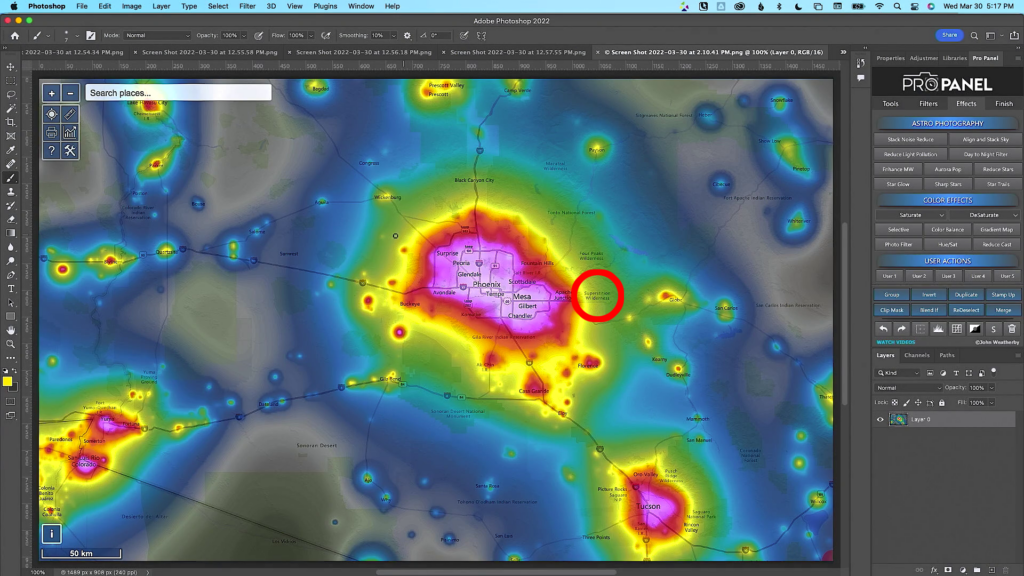
Reading the Light Pollution Map
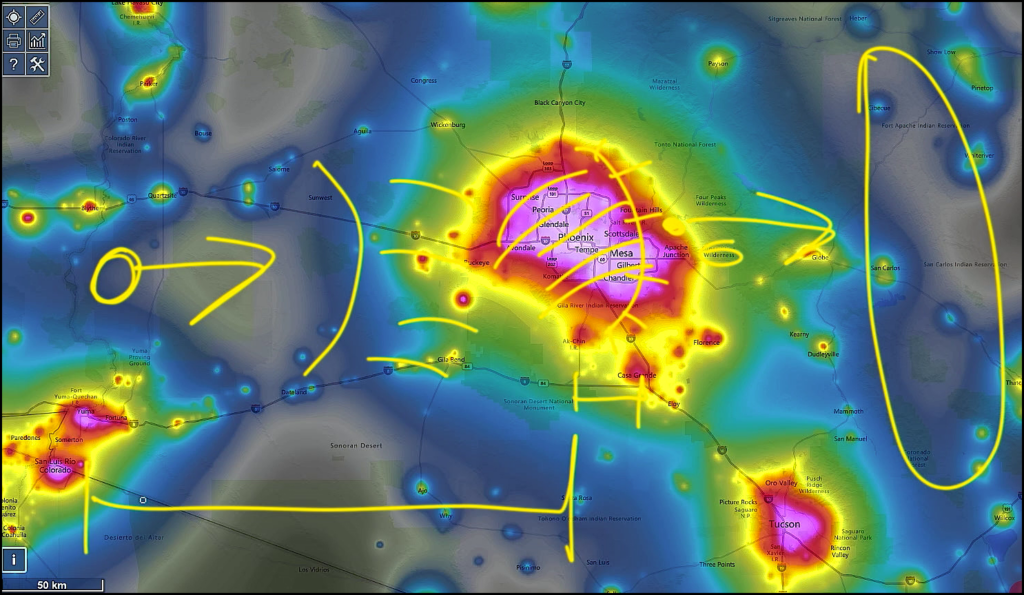
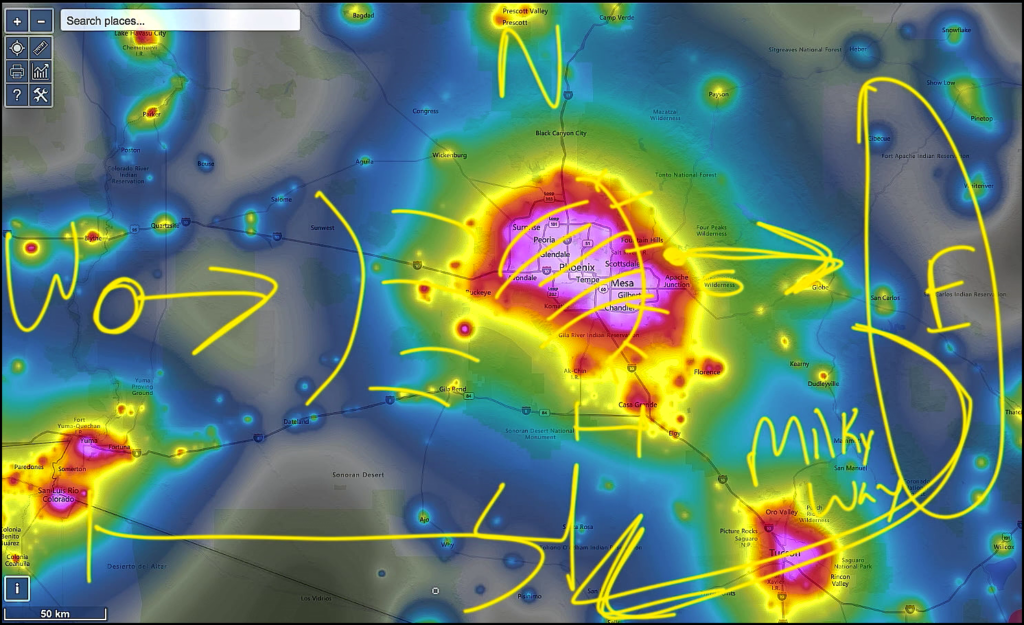
At first glance, shooting the Milky Way near a big city like Phoenix seems impossible. But by studying a light pollution map and carefully choosing my angle, I made it work.
We were shooting in the Superstition Mountains, where the glow from Phoenix cast light up onto the cliffs. Behind them, the sky stayed dark enough to reveal the Milky Way.

Now, compare that with another shoot I did in the Kofa Mountains. In that case, the city glow was on the horizon directly behind my subject. Because I was much farther away from Phoenix, it worked as a subtle silhouette effect. But in the Superstitions, being closer gave me enough light to actually paint the landscape.
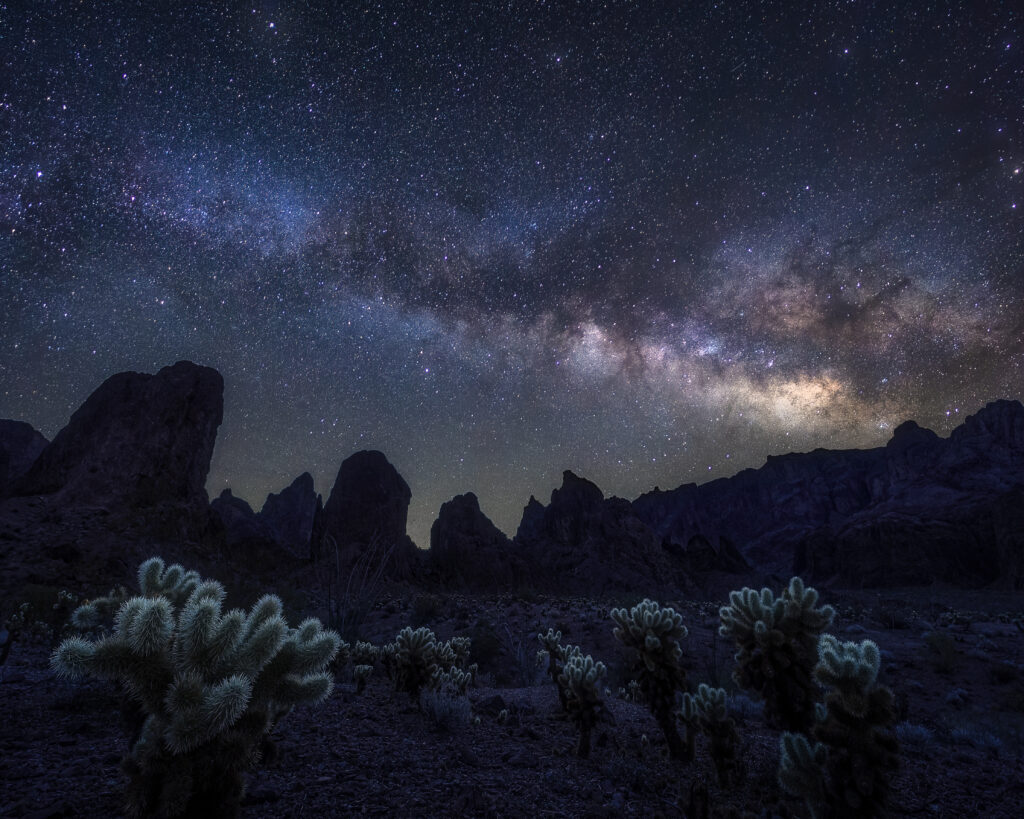
Kofa Mountains lit in silhouette by distant city glow—light pollution used as a creative tool, not an obstacle.
Timing With the Milky Way
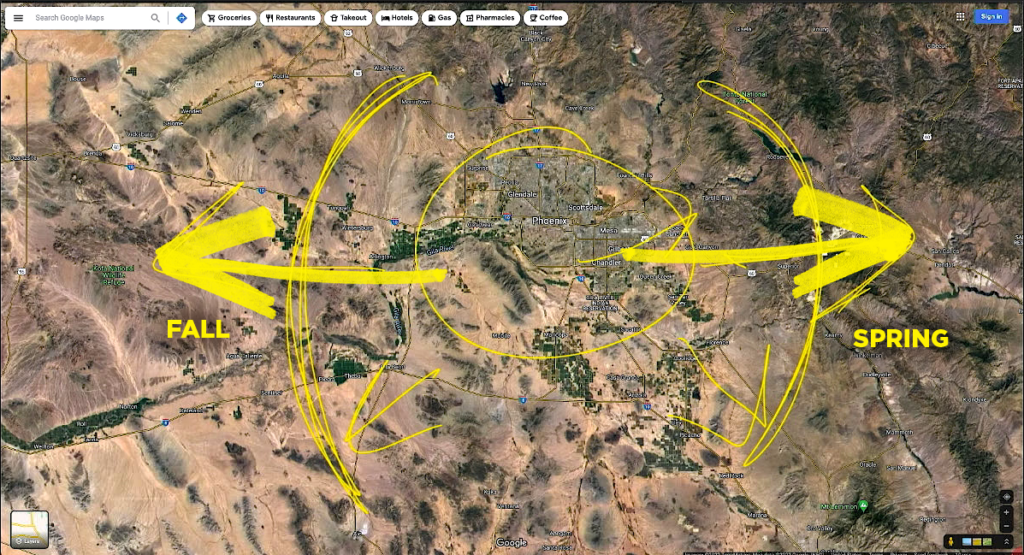
Is not just about location — timing matters too. In the Northern Hemisphere, during late spring and early summer the Milky Way’s bright central region (the core) begins to rise from the east or southeast in the evening hours and climbs higher overnight. As the year advances, the core rises earlier and sets earlier, shrinking the viewing window. By fall, the core often dips toward or below the western horizon by full night, making it much less visible in the evening sky.
This Superstitions location works best in the first half of the year (I was there in late February), when the Milky Way moves east to west away from Phoenix’s glow. By late summer or fall, you’d be shooting straight into the city light, and the sky would be blown out. So plan your shoot’s location based on research with stargazing tools (I like PhotoPills).
Shooting Position and Settings
On this night, we set up near the “Praying Hands” rock formation in the Superstition Mountains. Phoenix became our giant light panel, casting a warm glow on the landscape.
Here’s what I used:
- ISO 6400
- 15mm focal length
- f/2.8
- 10 seconds exposure
Normally I’d expose longer, but since the light pollution was so strong, I shortened to 10 seconds. That helped keep the Milky Way visible without overexposing the foreground.
The Key Takeaway
Light pollution doesn’t have to ruin your nightscapes—it can actually make them better. The trick is:
- Shoot away from the light domes.
- Let the glow illuminate your subject.
- Time your Milky Way shoots with the right season and direction.
Used wisely, even a Bortle 5 sky near a major city can produce a portfolio-worthy shot.
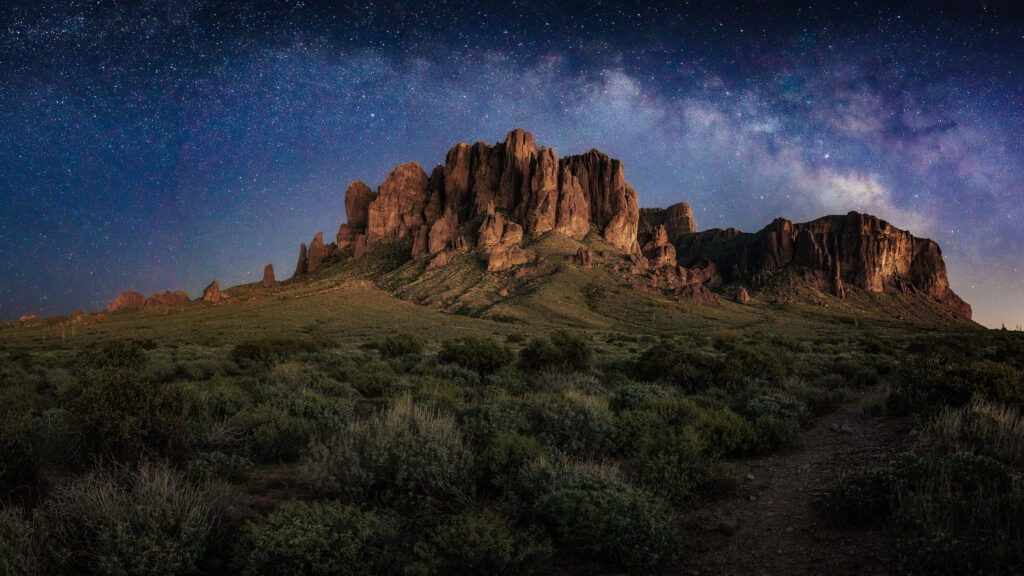
Phoenix as the light source, the Superstitions in the foreground, and the Milky Way rising above.
Your Journey to Landscape Mastery Starts Here
Want more techniques like this? Join us online for the Landscape Photography Conference, December 9–10, 2025, presented by KelbyOne Live. Erik Kuna and other industry pros will share their secrets for capturing unforgettable images—day and night.


